Motivation
Newtonian telescopes are the simplest of mirrored telescopes, and are the perfect project for teaching magnification, mirrors vs. lenses, and astronomy concepts.
Typically these telescopes have a price floor of about $80, check out my personal build. However that isn’t realistic for a class of 20 students.
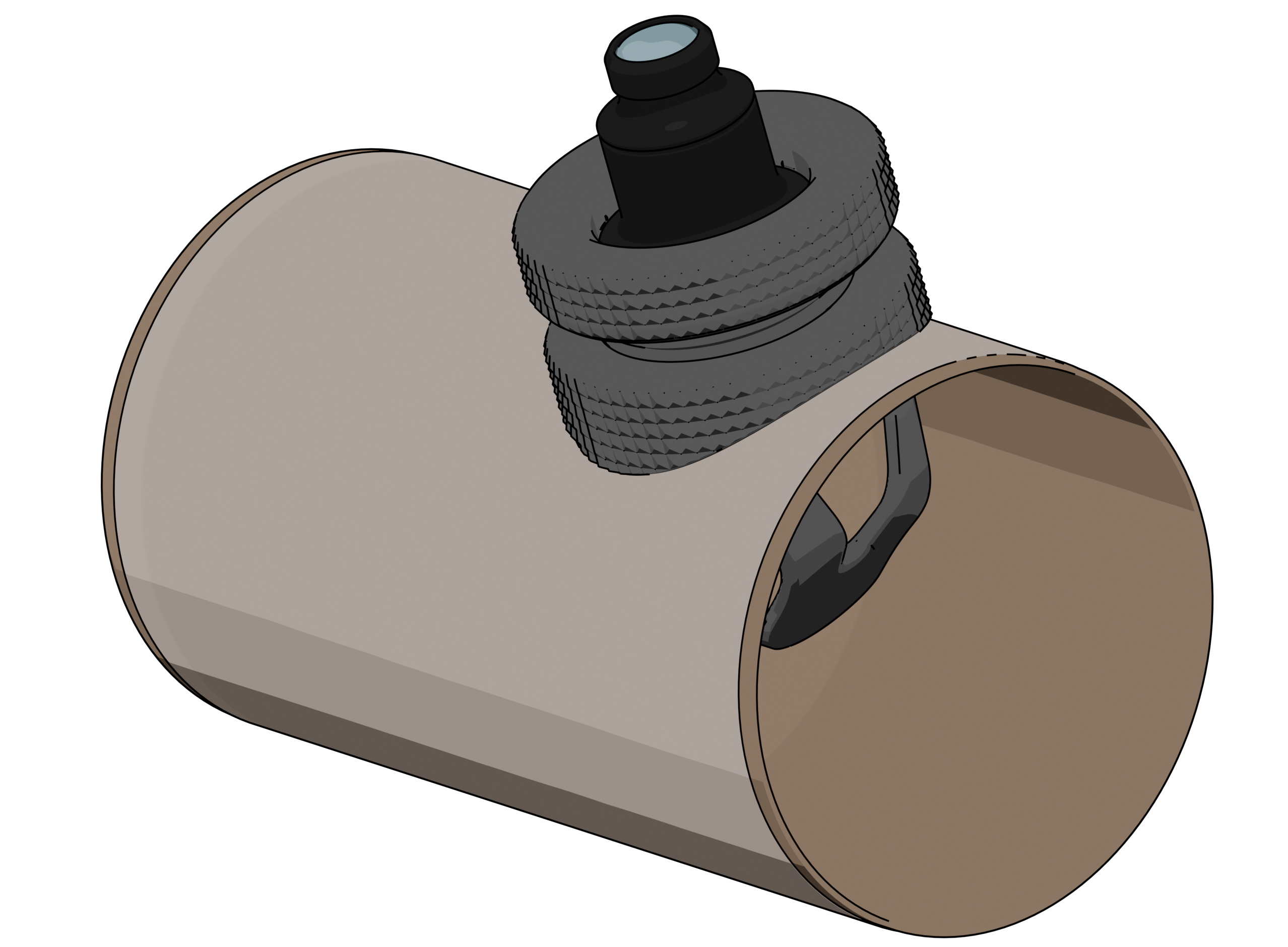
So I made the Oat-a-Scope! A Newtonian reflector whose casing is an oatmeal container, primary reflector a makeup compact, secondary reflector a sticker mirror, objective a cheap jewelers loupe, and all hardware 3D printed. It can also hold any standard 1.25″ telescope eyepiece.
Pro tip: have the kids bring in oatmeal containers, don’t be like me and buy a hundred and have to figure out what to do with all that oatmeal.
How it works
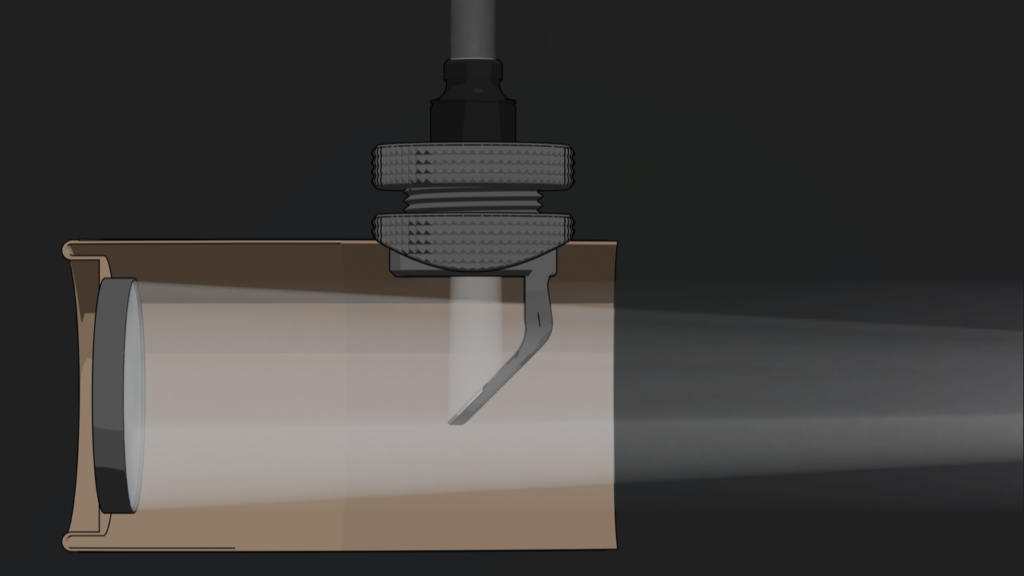
Newtonian telescopes operate by taking in collimated light and forming an image.
The light bounces off the primary mirror which focuses the light.
The focused light then bounces off the secondary mirror which is at a 45° angle. This moves the viewing axis off to the side. So that viewing doesn’t obstruct the image.
This light isn’t quite ready for our eyes though! So next we have the objective, which is a lens that in conjunction with the primary mirror magnifies the image into something we can see.

Key Concepts
Collimated Light
Collimated light means the light rays all travel in the same direction, moving side-by-side without spreading out much.
Notice how shadows are always about the same size in sunlight, but can change size indoors? That’s because light from the Sun comes from very far away, so its rays arrive nearly parallel, this is what we call collimated light.
Mirrors vs. Lenses
Both mirrors and lenses can focus/defocus light.
A lens manipulates light through refraction, geometry & index of refraction.
Mirrors however operate on reflection and the focusing effect is solely due to geometry.
Parabolic mirrors perfectly focus all incoming parallel/collimated light to a point known as the focus. This makes them perfect for astronomy. However they are harder to make than circular mirrors.Magnification
Magnification describes the enlarging or shrinking effect of an optical system.
The magnification of a two element system can be calculated via the focal length of the primary element divided by the focal length of the secondary.In the case of a telescope with a 900mm primary mirror and a 25mm objective, the magnification is x36.
Materials and Preparation
To prepare, have students bring in oatmeal containers. Order the compacts and loupes in bulk, and print sets of the 3D printed parts included below. I have also included a one page handout which covers materials, assembly, and basic concepts. The cost is about $5 per person, but could be halved if students bring in containers throughout the year.
In terms of tools, each Oat-a-Scope needs the use of a hot glue gun to secure the compact, and scissors/razor blade to form the hole. A ruler will also help in ensuring proper dimensions.
Item | Cost per Person | Photo |
Oatmeal Container | $2.25 |  |
10x Makeup Compact | $0.60 |  |
20x Jewelers Loupe | $1.20 |  |
Sticker Mirrors (Ø1″) | $0.25 |  |
Lens Carriage (3D Printed) | 44cm³ |  |
Secondary Mount (3D Printed) | 32cm³ |  |
Classroom handout which includes, materials, assembly instructions, and discussion questions.
 Loading…

 Reload document
  Open in new tab